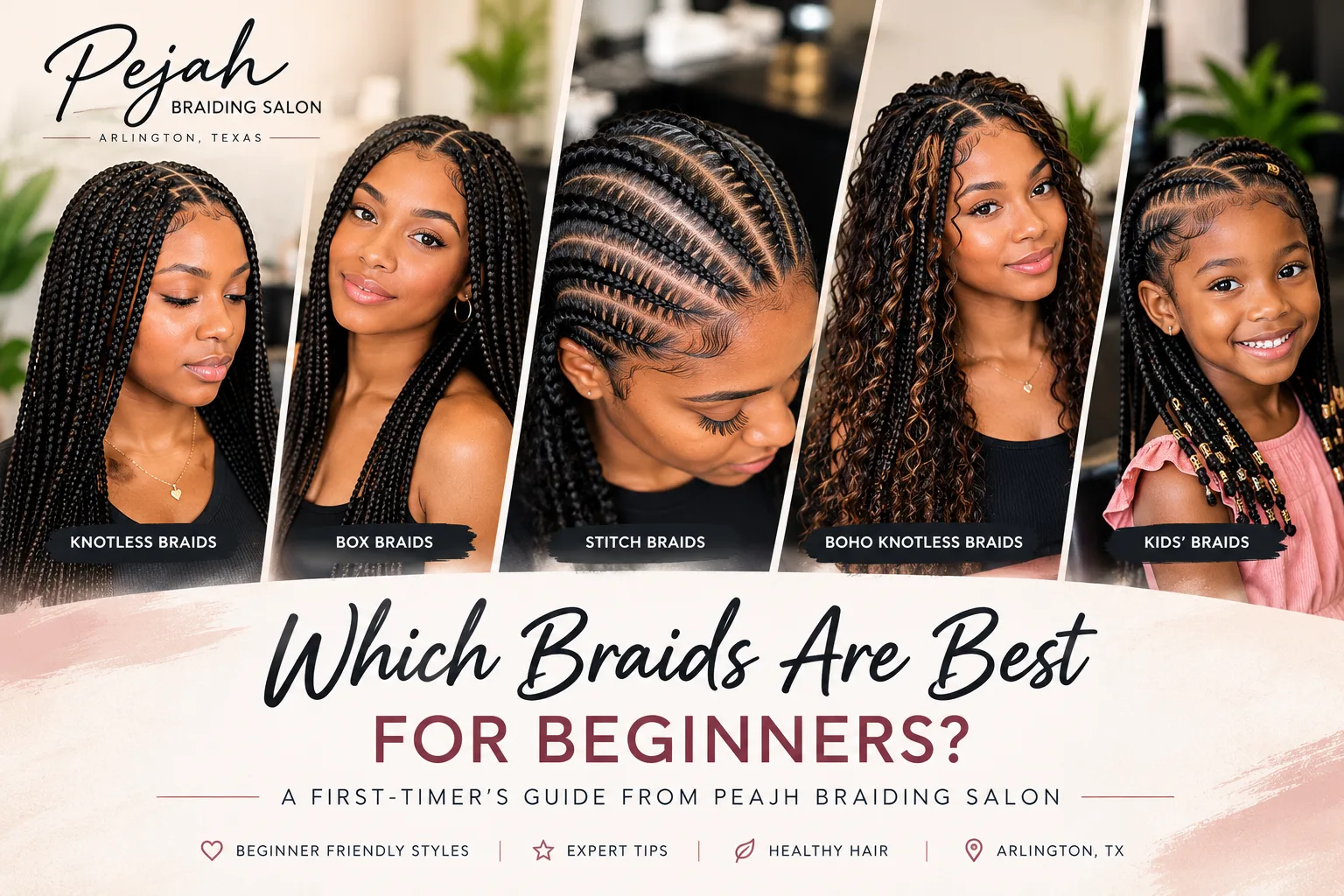
Which Braids Are Best for Beginners? A First-Timer's Guide
Discover the best braids for beginners, from medium knotless and box braids to stitch braids, with helpful tips from Pejah Braiding Salon in Arlington, TX.
Which Braids Are Best for Beginners? Find Your First Perfect Style
Thinking about getting braids for the first time? You may already have a folder full of hairstyle inspiration, saved pictures on your phone, or a style you've admired on a friend. But when it comes to choosing your own braids, the options can feel overwhelming.
Should you start with knotless braids? Are box braids easier to maintain? Would stitch braids be a better choice? And what if you love the look of boho braids but aren't sure you're ready for the extra care they require?
The good news is that you don't have to know everything about braiding before booking your first appointment. The right style depends on your hair, your lifestyle, how much maintenance you're comfortable with, and the look you want to achieve.
At Pejah Braiding Salon in Arlington, Texas, we recommend medium knotless braids and medium box braids as excellent starting points for many first-time clients. Stitch braids are another option if you prefer a cornrow look, while boho knotless braids offer a beautiful finish for those willing to give their curls a little extra attention.
Let's explore the options so you can choose your first braided hairstyle with confidence.
What Makes a Braid Style Beginner-Friendly?
A beginner-friendly hairstyle isn't necessarily the simplest style to install. It's a style that suits your needs and feels manageable once you leave the salon.
Before choosing your first braids, consider these four things.
1. Comfort
Your first braided hairstyle should feel comfortable on your scalp. Braids that are too tight or too heavy can cause soreness and place unnecessary tension on your hairline.
Tell your braider if you have a sensitive scalp, delicate edges, or concerns about tension. A good installation should not require you to endure significant pain.
2. Maintenance
Some braid styles need little daily attention beyond protecting them at night and caring for your scalp. Others, particularly styles with loose curls, need more frequent detangling and styling.
Be honest with yourself about how much time you want to spend on your hair. A beautiful style that fits your routine is usually a better choice than one that requires more maintenance than you're prepared to give.
3. Styling Versatility
Do you want to wear your hair down, put it into a ponytail, or create different looks throughout the week?
Your preferred styling options can help determine which braid size and technique will suit you best.
4. Your Natural Hair
Your hair length, density, texture, condition, and ability to support extensions all matter. A style that works well for one person may need adjustments for another.
If you're unsure which style will suit your hair, contact Pejah Braiding Salon before booking. You can discuss your preferred look and ask questions about the available options.
5 Beginner-Friendly Braid Styles to Consider
Here are five styles worth considering when choosing your first braided hairstyle.
1. Medium Knotless Braids: A Great First Choice
Medium knotless braids are one of our recommended starting points for first-time clients.
Unlike traditional box braids that begin with a visible knot of extension hair, knotless braids start with your natural hair, with extension hair gradually added as the braid is formed. This creates a flatter appearance at the roots and can help reduce the concentrated tension associated with a bulky starting knot.
Why are medium knotless braids a good beginner option?
They offer a balanced, full appearance without the look of extremely small braids.
They provide flexibility for different hairstyles.
They can feel lightweight when the extensions and installation are appropriate for your hair.
They work for a wide range of personal styles and occasions.
Medium knotless braids are suitable for clients who want a versatile protective hairstyle without committing to very small braids.
Keep in mind that knotless braids can still cause damage if they are installed too tightly or are too heavy for your natural hair. The technique alone does not guarantee a tension-free style.
Best for: First-time clients who want a versatile, natural-looking braided style.
Explore our knotless braids service to learn more. Also if you already have your braids done, then it is most important to find out how long your knotless braids will last before you visit Pejah again.
2. Medium Box Braids: A Classic Option
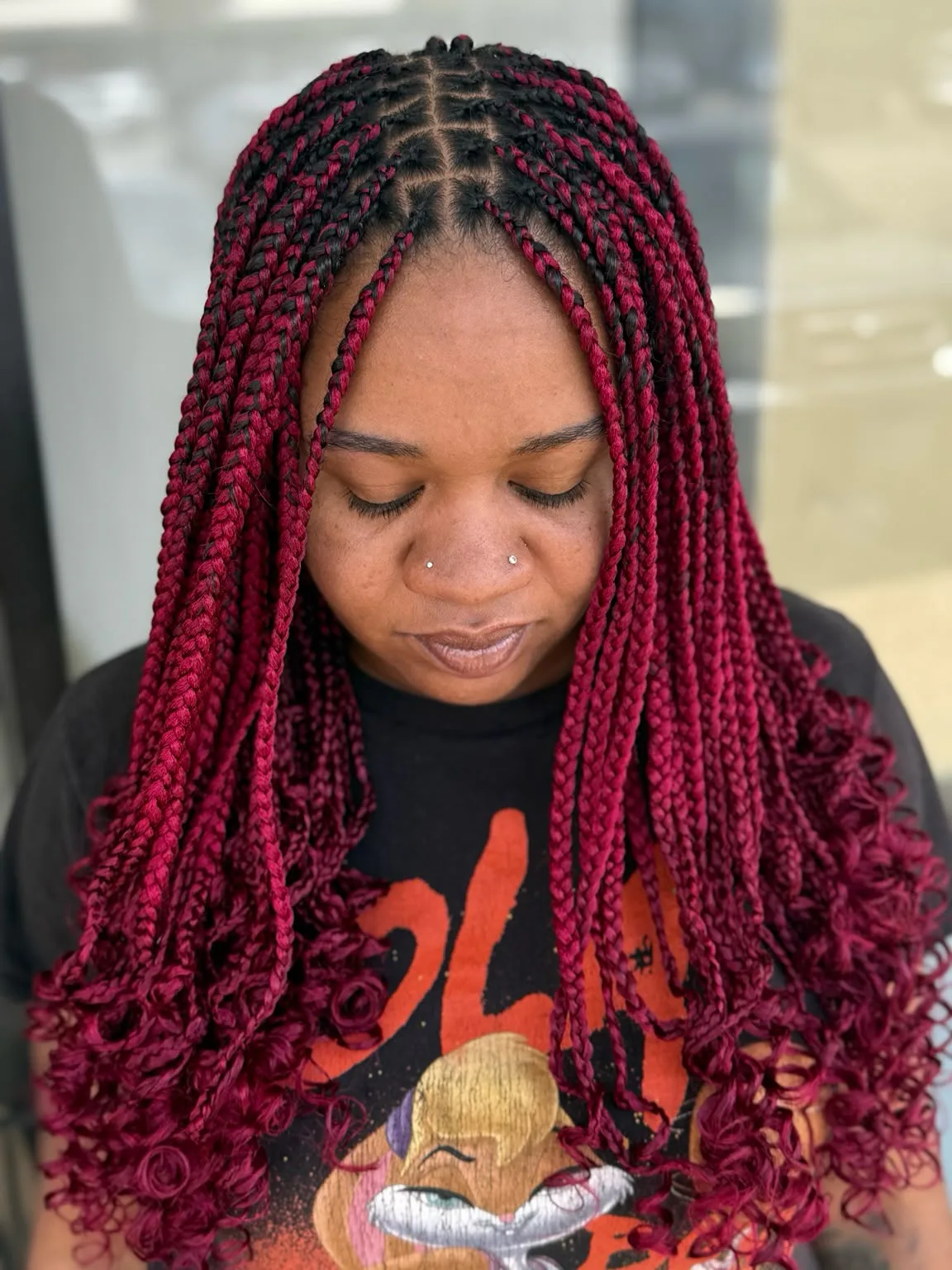
If you prefer a traditional braided look, medium box braids are another excellent choice.
Box braids are created by dividing the hair into individual sections and braiding each section, often with extensions. The result is a classic style that can be worn in different lengths and adapted to your preferred look.
Medium box braids provide a good balance between fullness and manageability. They are also a useful starting point if you like defined individual braids and want plenty of styling options.
One thing to understand is that traditional box braids and knotless braids differ in how the extensions are incorporated at the roots. Depending on the technique, extension weight, and tension, box braids may feel different from knotless braids during the first few days.
If you're deciding between the two, consider how you want your roots to look and how much weight and tension your hair can comfortably support.
Best for: Beginners who love a classic braided appearance with individual braids and flexible styling options.
See our box braids service.
3. Stitch Braids: For a Clean Cornrow Look
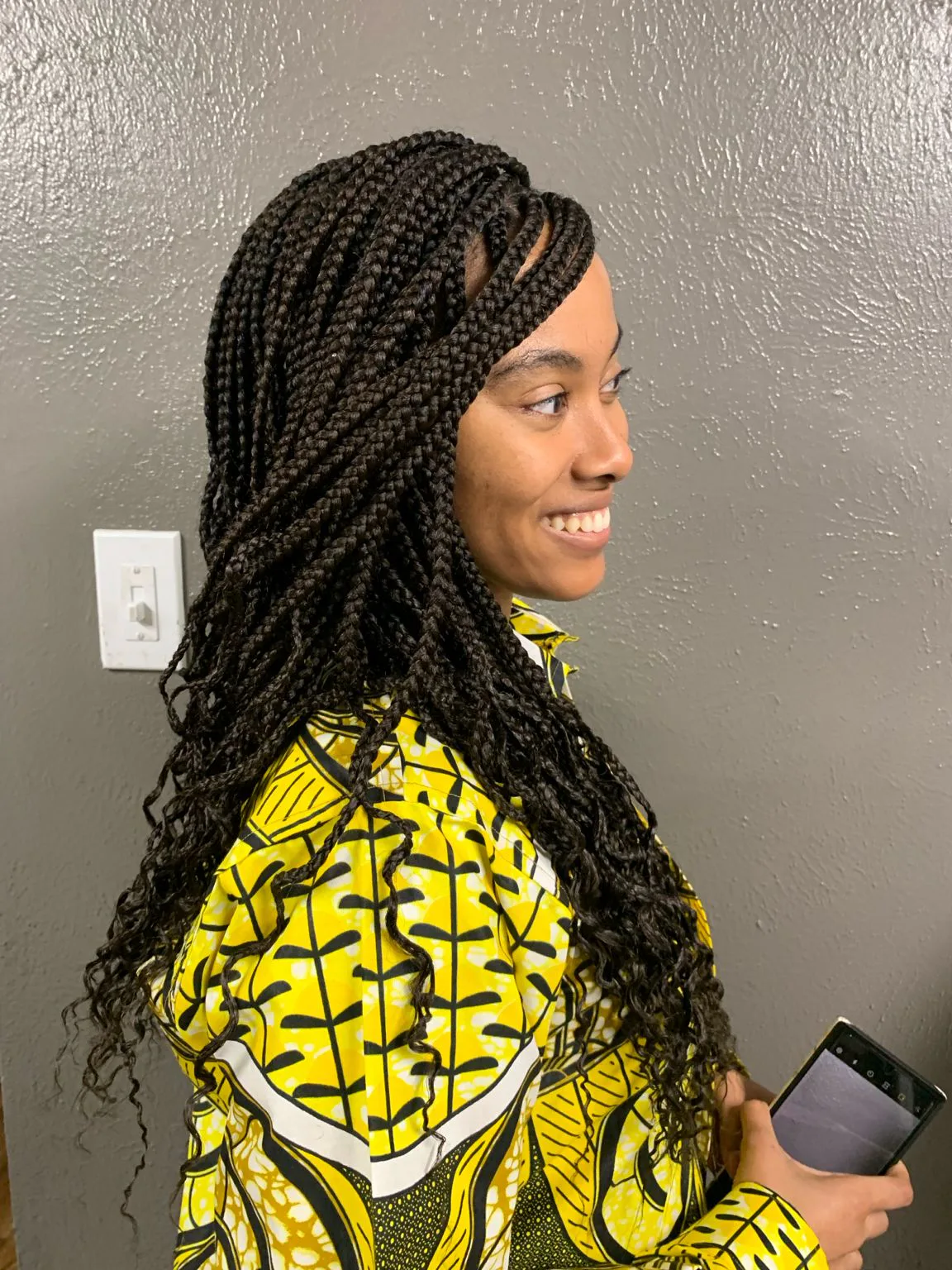
Not everyone wants individual braids hanging freely. If you prefer a style that follows the shape of your head, stitch braids may be a better fit.
Stitch braids are a cornrow style recognized by their defined, clean parting patterns. Depending on the design, the braids can run straight back or follow more creative patterns.
They can be a good choice for someone who prefers a neat, structured hairstyle and doesn't need the versatility of individual braids.
Before booking, think about the pattern you want and whether you prefer a simple design or a more detailed look. Your chosen pattern and the number of braids will influence the final appearance.
As with other braided styles, the cornrows should not be excessively tight. If you experience pain, pulling, or significant discomfort, let your stylist know.
Best for: Beginners who like cornrows, clean patterns, and a style that stays close to the scalp.
Explore our stitch braids service.
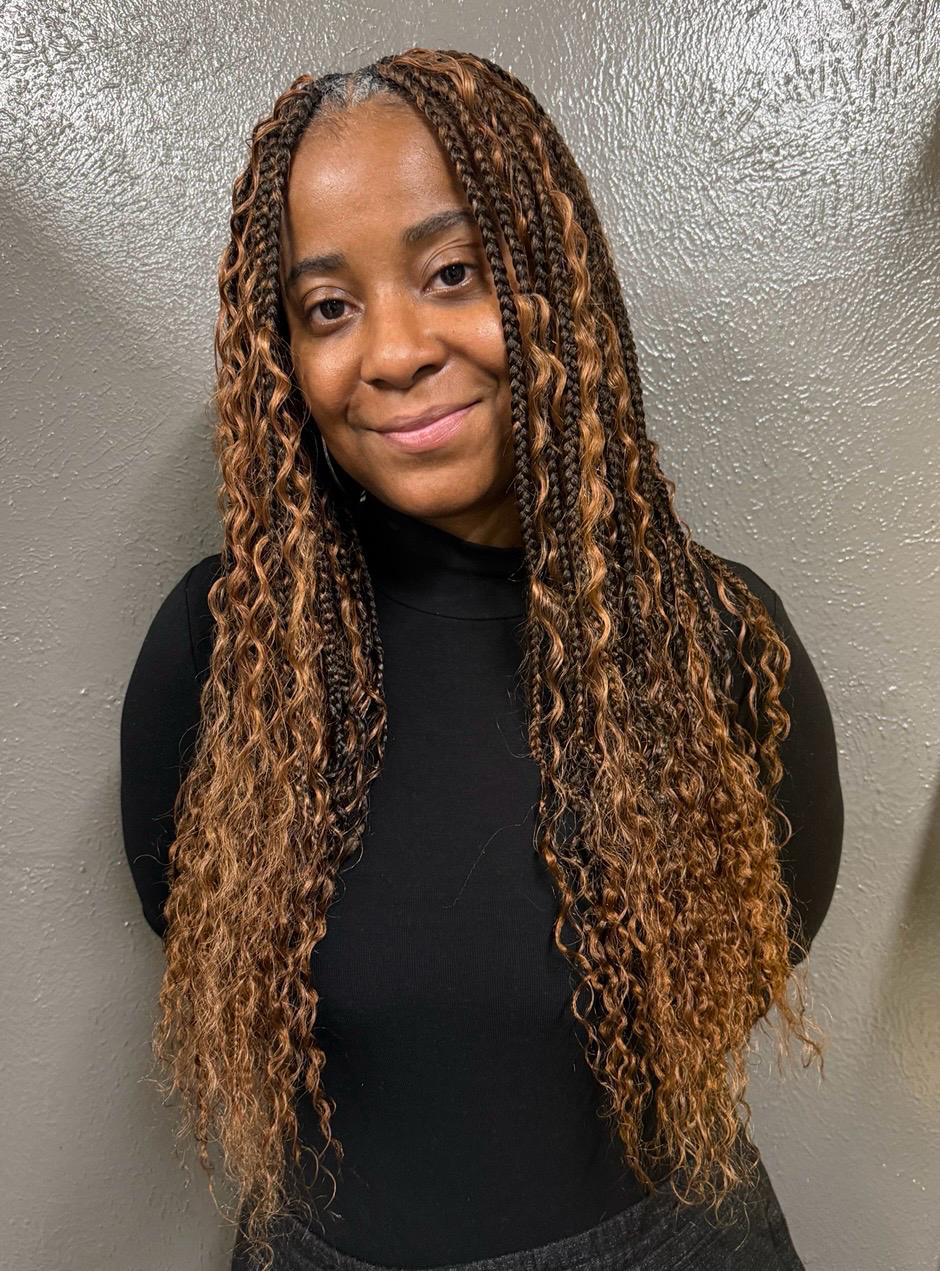
4. Boho Knotless Braids: Beautiful but More Maintenance
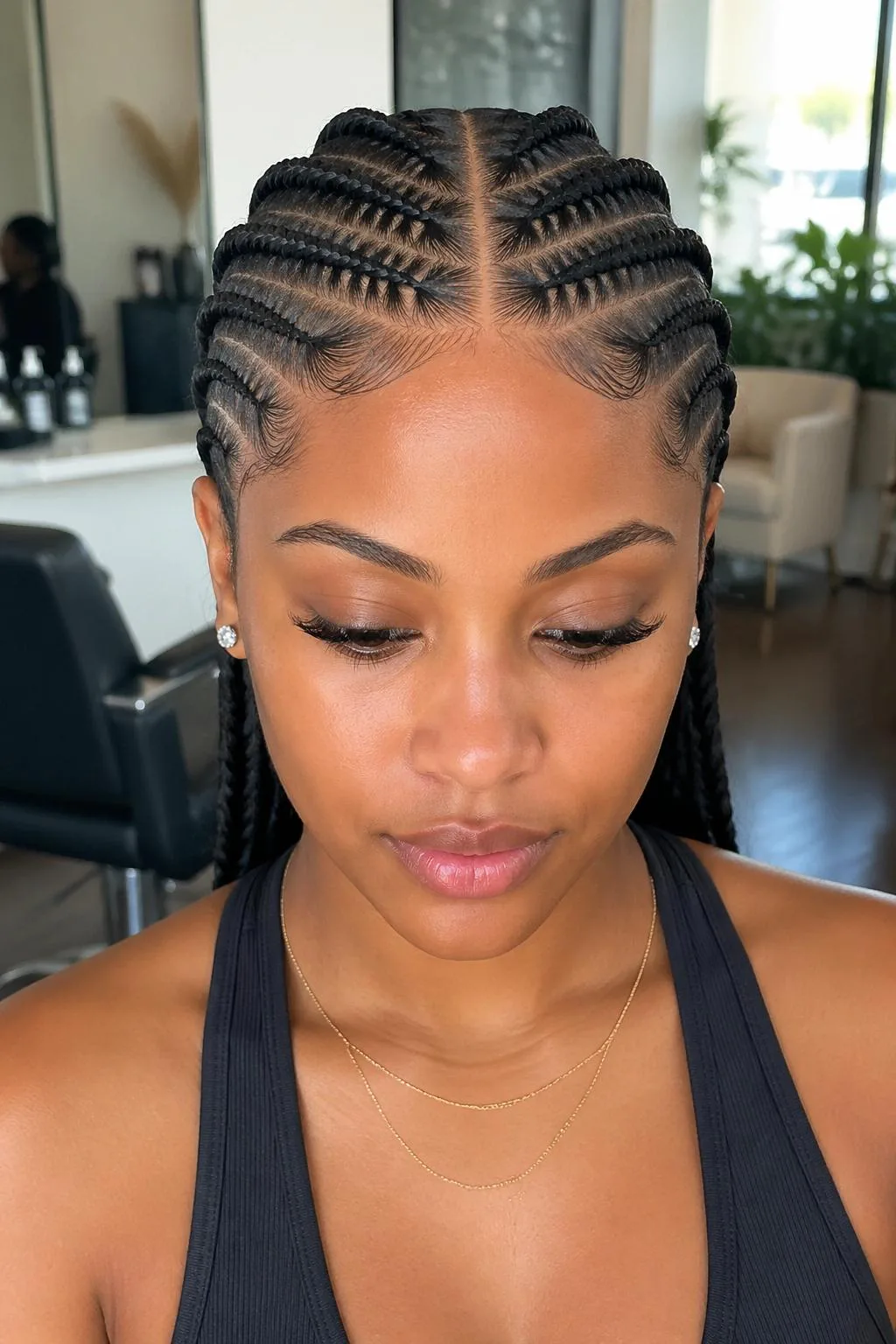
Boho knotless braids combine knotless braids with loose curls that create a softer, more textured appearance.
They're a popular option for clients who want a look that blends the structure of braids with the movement of curls. The added curls can make the style feel romantic, relaxed, and distinctive.
However, boho braids require more attention than knotless braids without loose curls. The curls can tangle, lose definition, or become frizzy through everyday friction. They may need gentle separation and careful handling to stay looking their best.
If this is your first braided style and you love the boho look, don't rule it out. Just make sure you're comfortable with the additional care.
Best for: Beginners who prioritize a curly, textured finish and are willing to maintain the loose curls.
Take a look at our boho knotless braids service.
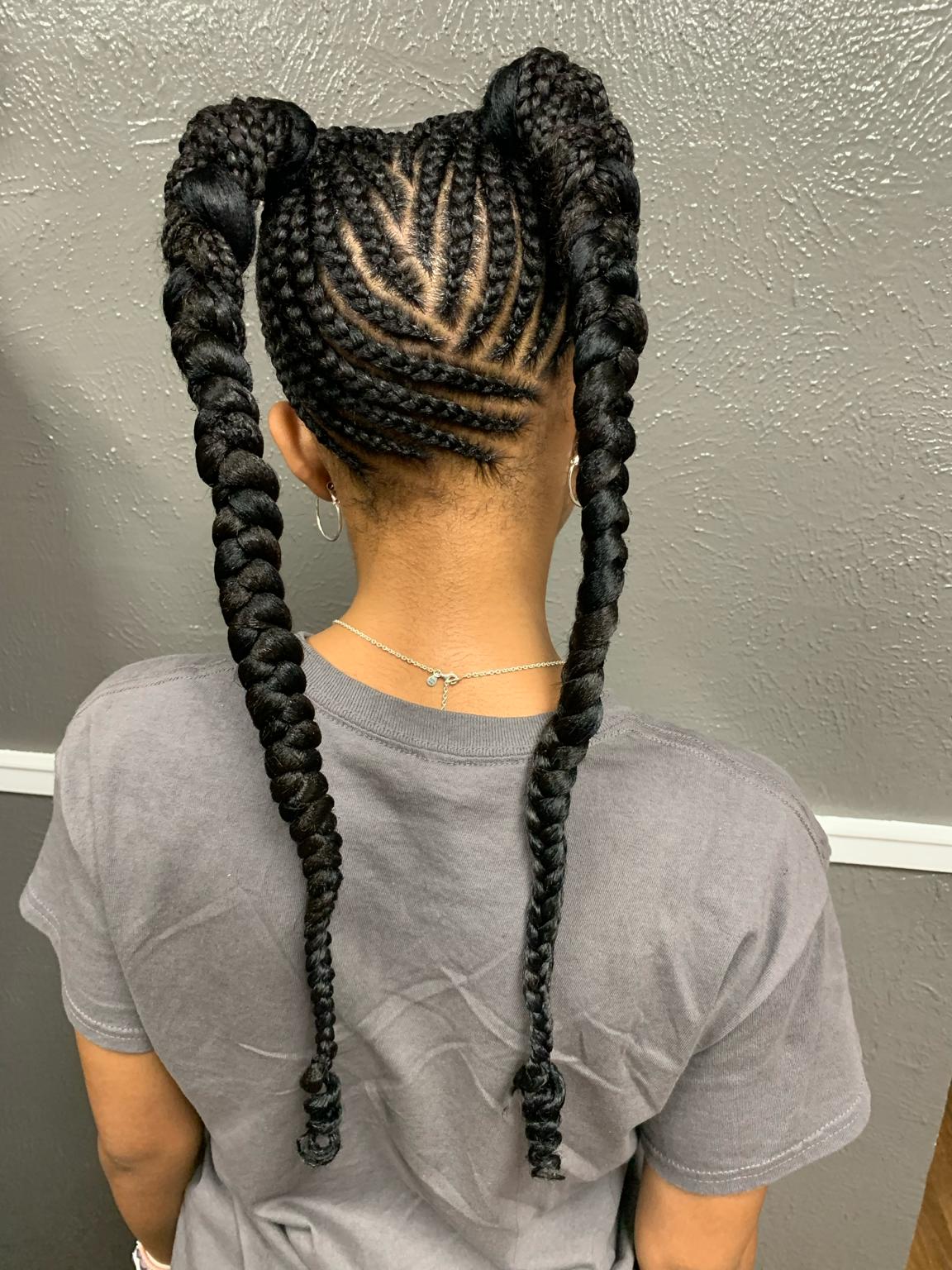
5. Kids' Braids: Choose for the Child, Not Just the Picture
For children, the best beginner braid style depends on their age, hair, comfort level, and preferred appearance.
A child who sits comfortably for longer appointments may be able to enjoy a more detailed style. A younger child who finds it difficult to sit still may do better with a simpler design.
Parents should also consider how much daily care the style will need and whether the child can comfortably sleep and participate in normal activities while wearing it.
Avoid choosing a style simply because it looks beautiful in a photograph. The priority should be a comfortable installation that suits the child's hair and age.
Best for: Parents looking for a braided style suited to their child's needs, preferences, and ability to manage aftercare.
Explore our kids' braids service.
Which Braids Are Best for Beginners? A Quick Comparison
Use this table to narrow down your choices before booking.
Our recommendation: If you're an adult or teen getting braids for the first time and want individual braids, start by considering medium knotless braids or medium box braids. If you prefer a cornrow design, ask about stitch braids. For children, choose a style based on the child's individual needs.
Why Medium Braids Are Often a Good Starting Point
Braid size can affect the appearance of your hairstyle, the installation process, and the amount of care required.
We generally recommend medium braids for many first-time clients because they offer a balanced combination of fullness and practicality.
Medium Braids
Medium braids provide a defined look without creating as many individual sections as very small braids. They're a versatile choice for clients who want a full hairstyle that can be worn in different ways.
Large Braids
Large braids create a bold appearance and may take less time to install than smaller braids, depending on the style and length. However, larger braids can contain more extension hair per section, so their weight needs to be considered carefully.
Small Braids
Small braids create a detailed look and offer plenty of styling flexibility. However, they often require more installation time and can be more involved to remove.
Smaller is not automatically better, and larger is not automatically easier on your hair. The right size depends on your hair's condition, the style you want, and how the braids are installed.
How to Prepare for Your First Braiding Appointment
A little preparation can make your first appointment more comfortable and help your braider work efficiently.
Arrive With Clean, Detangled Hair
At Pejah Braiding Salon, we ask clients to arrive with clean, detangled hair. Removing tangles beforehand helps make sectioning easier and can reduce unnecessary pulling during preparation.
If you're unsure how to prepare your hair, contact the salon before your appointment for guidance.
Avoid Tight Hairstyles Before Your Visit
Give your scalp a break before your appointment. Avoid styles that pull tightly on your edges, especially if your hairline is already feeling tender.
If you have areas of breakage, irritation, or unusual scalp sensitivity, mention them before braiding begins.
Bring a Reference Photo
A photo can help communicate the look you have in mind. If possible, bring an image showing the braid size, length, parting, and overall finish you like.
Remember that the result may vary depending on your own hair and the selected style.
Discuss Your Hair and Styling Goals
Not sure whether to choose knotless braids, box braids, or stitch braids? Contact Pejah Braiding Salon before booking to discuss your options.
You can ask about available styles, suitable braid sizes, extension requirements, and anything else you need to know before your appointment.
Plan Enough Time
Braiding can take several hours. The actual appointment time depends on the style, braid size, length, and preparation required.
Check the expected duration when booking so you can plan your day without rushing.
How to Care for Your First Braided Hairstyle
Your braids may be installed professionally, but how you care for them afterward plays an important role in their appearance and your natural hair's condition.
Protect Your Hair While Sleeping
Use a satin or silk bonnet, scarf, or pillowcase to reduce friction while you sleep. This can help minimize frizz and keep your braids looking neat.
If your braids are long, arrange them comfortably before putting on your bonnet instead of forcing them into a tight position.
Keep Your Scalp Clean
Braids don't mean you should ignore your scalp. Sweat, oil, and product residue can accumulate over time.
Cleanse your scalp gently as needed, following the care instructions appropriate for your style. Avoid aggressive rubbing that could disturb the braids, and allow your hair to dry thoroughly after washing.
Use Products Sparingly
Heavy layers of oil, cream, or styling products can build up around the roots and make your hair feel greasy.
Choose lightweight products suitable for your scalp and braid style. If you use mousse to manage flyaways, follow the product directions and avoid repeatedly layering it over buildup.
Be Gentle With Your Edges
Avoid pulling your braids into tight ponytails or buns every day. Repeated tension can stress the hairline, particularly when the braids are heavy.
If your style feels painful, causes persistent soreness, or appears to pull at your edges, don't ignore the discomfort. Contact your braider and seek professional advice if you notice signs of scalp or hair damage.
Follow a Realistic Wear Schedule
Don't assume that every braid style should stay in for the same amount of time. Wear time depends on the style, installation, hair growth, and condition of your natural hair.
For example, loose curls in boho braids may need extra attention before the braids themselves are ready for removal. If you're unsure when to take your style down, ask your braider rather than trying to extend it indefinitely.
Common Mistakes First-Time Braid Clients Should Avoid
Your first braided hairstyle is easier to enjoy when you know what not to do.
Choosing a style based only on a picture. A style may look beautiful online but require more maintenance or a longer appointment than you expect. Consider your routine and hair condition before deciding.
Assuming tighter braids last longer. Tightness is not a sign of quality. Excessive tension can cause pain and damage, so comfort should always be a priority.
Using too many products. Applying several oils, creams, and styling products can create buildup instead of improving your braids.
Forgetting nighttime protection. Friction from bedding can make braids frizzy and cause loose curls to tangle.
Leaving discomfort unaddressed. Some adjustment may be needed to make a style comfortable, but significant pain or persistent scalp tenderness should never be treated as something you simply have to tolerate.
Choosing a style without considering takedown. Every protective style eventually needs to be removed. Think about the maintenance and takedown process before committing to a look.
Frequently Asked Questions About Beginner Braids
Which braids are easiest for beginners?
Medium knotless braids and medium box braids are good starting points for many people who want individual braids. If you prefer cornrows, stitch braids may be more suitable. The easiest option depends on your hair, preferred style, and maintenance routine.
Are knotless braids better than box braids for beginners?
Neither is automatically better for everyone. Knotless braids begin with your natural hair and gradually incorporate extensions, while traditional box braids commonly begin with a knot of extension hair. Some people prefer the flatter roots of knotless braids, while others love the classic appearance of box braids.
Should I get medium or large braids for my first appointment?
Medium braids are a good starting point for many first-time clients because they balance fullness and versatility. Large braids may suit someone who prefers a bolder look. Your braider can help you choose a size that works with your hair and the style you want.
Are boho knotless braids suitable for beginners?
Yes. You don't need previous braiding experience to choose boho knotless braids. However, the loose curls need additional care to reduce tangling and frizz. Consider whether you're comfortable maintaining them before booking.
How long does a beginner braid appointment take?
There isn't one standard duration. Appointment time depends on the braid style, size, length, and hair preparation required. Ask the salon for an estimate when booking so you can plan accordingly.
Should I wash my hair before getting braids?
Yes. Arrive with clean, detangled hair, following any preparation instructions provided by your salon. If you're uncertain about what your hair needs before the appointment, contact your braider in advance.
Can children get braids for the first time?
Yes, provided the selected style is suitable for the child's age, hair, and comfort. Parents should discuss their child's needs and choose a style that can be maintained appropriately at home.
How do I know if my braids are too tight?
Significant pain, persistent soreness, pulling at the hairline, or discomfort that doesn't settle are warning signs. Braids should not need to be painfully tight to stay in place. Speak up promptly if the installation feels uncomfortable.
Can I book a consultation if I don't know which braids to choose?
If you're unsure which style to book, contact Pejah Braiding Salon to discuss your hair, preferred appearance, and available options before your appointment.
Explore Braiding Services at Pejah Braiding Salon
Ready to choose your first style? Explore the available services to see which options match your preferences.
You can also visit the Pejah Braiding Salon website for more information.
Your First Braided Style Starts With the Right Choice
Getting braids for the first time should feel exciting, not confusing. You don't need to choose the most elaborate style or follow every trend. Start with a look that suits your hair, fits your lifestyle, and feels manageable for you.
For many first-time clients, medium knotless braids or medium box braids are excellent choices. Stitch braids are worth considering if you prefer cornrows, while boho knotless braids are a beautiful option if you're happy to spend extra time caring for the curls.
At Pejah Braiding Salon in Arlington, Texas, we help clients of all ages explore braided styles that suit their preferences and hair needs. If you're unsure what to choose, contact us before booking so you can discuss your options.
When you're ready, book your appointment online or call the salon. We'll help you take the next step toward a braided style you'll feel confident wearing.
External resources
These resources can support general advice on scalp health and avoiding traction-related hair damage:
American Academy of Dermatology — Hair loss and hairstyles that pull.
American Academy of Pediatrics — consult its parenting resources for age-appropriate hair care guidance.